Cirrhosis

Reverse Cirrhosis of the liver
The only book you’ll ever need to reverse Cirrhosis of the liver

Reversing Cirrhosis - "There are 42 markers of Cirrhosis - I'm reversing them one by one" - David Manteit

David had decompensated Cirrhosis in May 23. He was on his deathbed, with deranged liver liver levels and Ascites. 


At worst, in May 26, David is now Compensated. Perhaps in May 26, David has moved into the F3 category. 


There are many signs of reversal, including all 80 normal blood tests and ELF test 9.5, in May 26.


David has perfect type 2 diabetes and Cholesterol blood tests, and Blood pressure well in normal range.

The aims of this book - and Cirrhosis reversal

Reverse Cirrhosis symptoms

Reverse Cirrhosis liver blood tests

Reverse Cirrhosis ultrasound and scan appearances

Reverse Cirrhosis Fibroscan scores

Find out in the book how 200 decompensated Cirrhosis patients reversed to Compensated Cirrhosis in Jan 26
They also reversed Fibroscan 65 kPa to

They also reversed their Fibroscan from 65kPa to 23kPa on average

Do you want to end up with
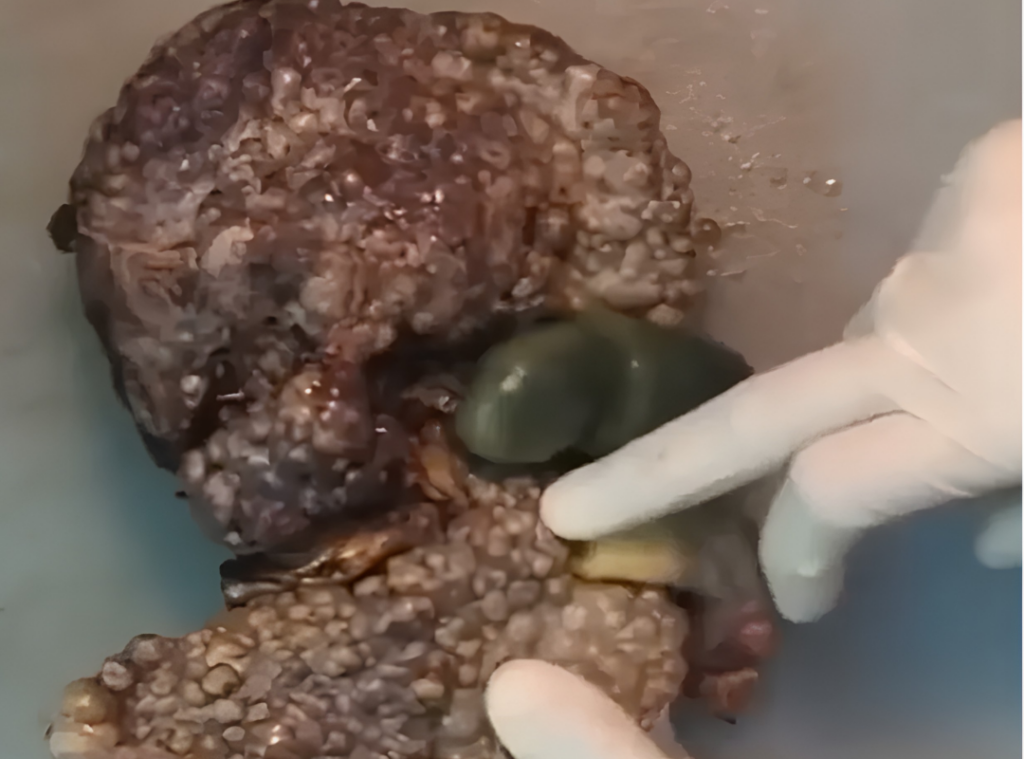
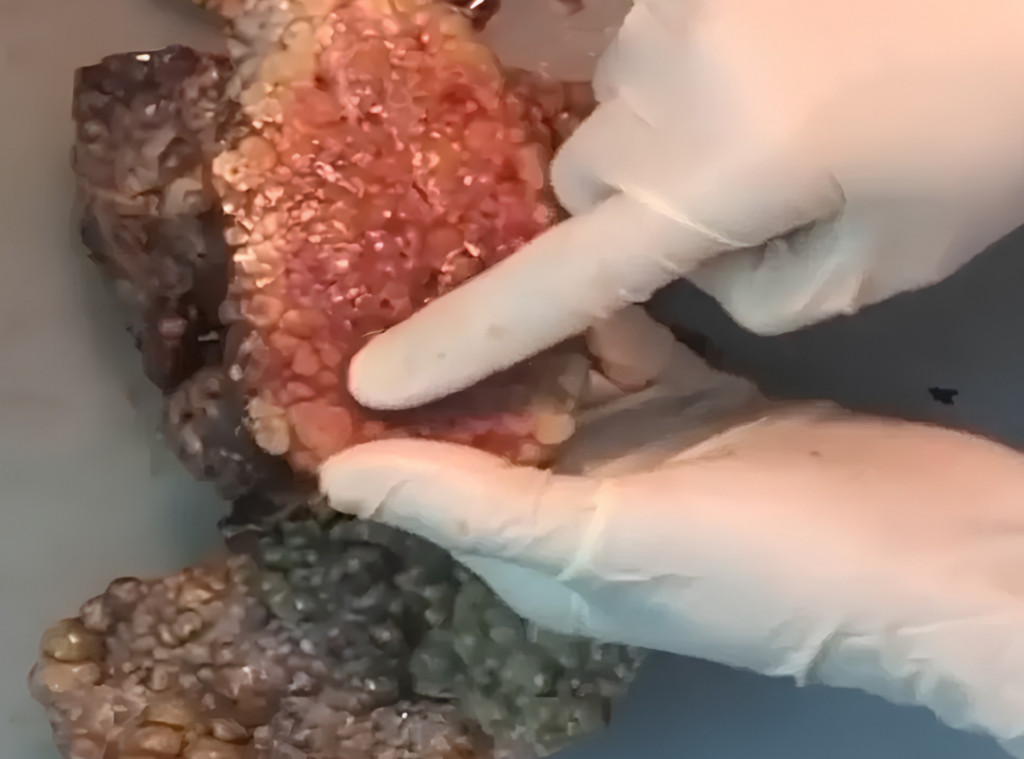
a Cirrhosis liver like this?

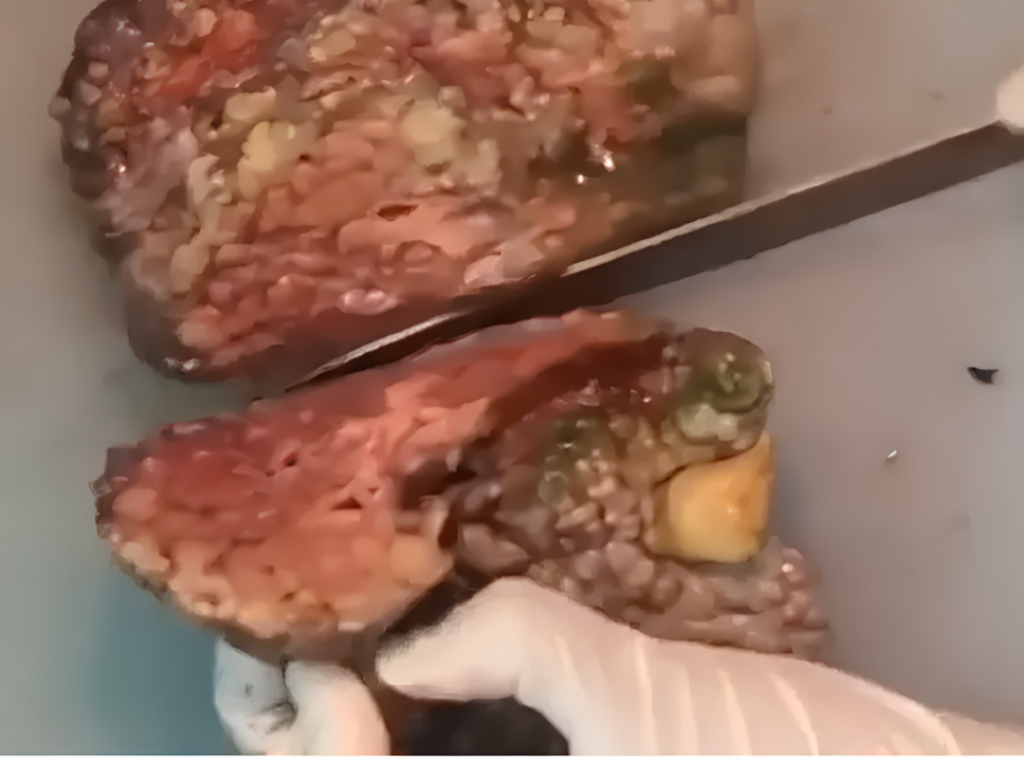
They say it takes 20 years before your liver looks like in this video. The change to cirrhosis of the liver may happen in the last year alone. This is what an alcoholic cirrhosis liver looks like. It can have micronular or macronodular nodules, or a mixture of both. Acknowledgement to Reddit. It’s in our medical library.

What are the symptoms
of Cirrhosis?

There May Be No Symptoms Until The Decompensated Stage

Many people with cirrhosis have no noticeable symptoms until the liver reaches what is known as the decompensated stage. At this point, the liver can no longer compensate for the damage and serious complications begin to appear.

What Is Decompensated Cirrhosis?

A decompensated cirrhosis liver is defined by the presence of one or more of the following conditions:

Portal Hypertension Increased pressure in the portal vein is the hallmark of decompensated cirrhosis. It leads to a cascade of complications throughout the body.

Complications of Portal Hypertension

ASCITES

A build-up of fluid in the abdomen, causing visible swelling

VARICES

Swollen veins that can bleed, occurring in several locations: oesophageal varices (throat), stomach varices, veins surrounding the belly button, haemorrhoidal varices (inside the rectum), portosystemic varices (around the liver)

HEPATIC ENCEPHALOPATHY

Brain dysfunction caused by the liver's inability to filter toxins from the blood

HEPATORENAL SYNDROME

Kidney failure resulting from advanced liver disease

JAUNDICE

Yellowing of the skin and eyes caused by a build-up of bilirubin

SPONTANEOUS BACTERIAL PERITONITIS

A bacterial infection found in ascites fluid, requiring urgent medical attention

Talk to your GP. The only thing is, that your GP is not licenced to provide liver specialist advice. They may refer you to a liver specialist. But you may have to wait up to 12 months to see a liver specialist. What do you do in the meantime?  You could read this book for more information, with links to 20,000 pages of medical studies and 200 hours of  videos.

You will likely die from
Portal Hypertension if caused by cirrhosis

What Does Portal Hypertension Look Like?

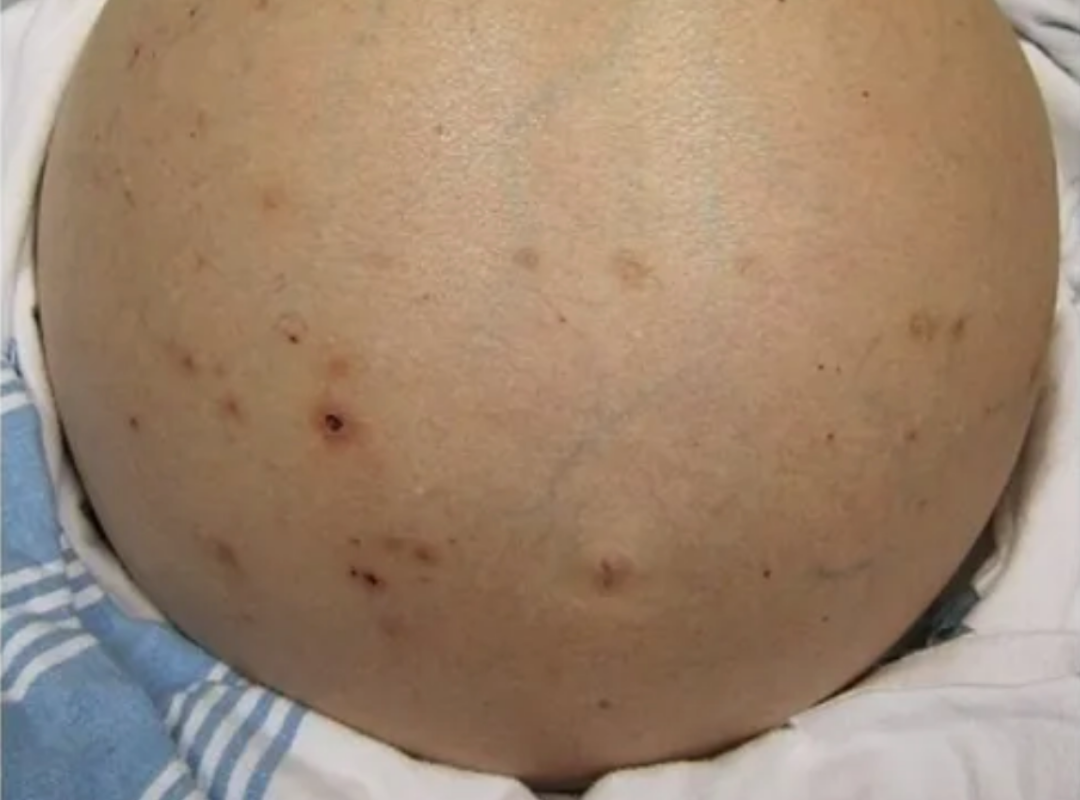
ASCITES

Other names: Peritoneal cavity fluid, peritoneal fluid excess, hydroperitoneum, abdominal dropsy. The abdomen of a person with cirrhosis that has resulted in massive ascites and prominent superficial veins.
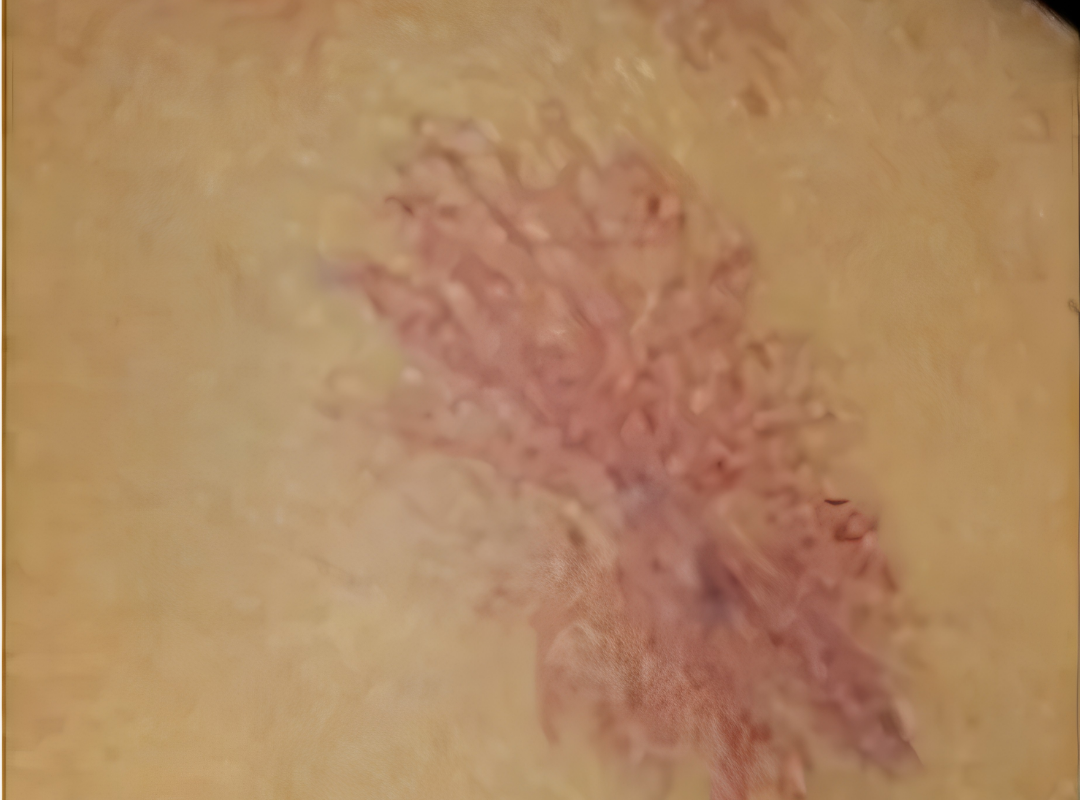
Spider Angioma

Other names: Nevus araneus, spider nevus, vascular spider, telangiectasia. Non-begin angiomas indicating cirrhosis. These are small veins with a centre, usually on your upper body. They have a centre spot with a spider like veins appearance.
Ascites appears as a large belly, looking like you are pregnant. Thousands of people  all over the world. get to reverse ascites. Not many doctors tell you that, due to patient confidentiality. So much for cirrhosis is not reversible. It may not be, for many. Some have fully reverse cirrhosis. Some have gone from F4 to F3, which means that there are a lot less complications. However, there are many cirrhosis symptoms that are reversible, at least. This becomes “recompensated”  cirrhosis from previously decompensated cirrhosis.

You can lead a normal life for up to 35+ years. Ascites can be controlled by parenthesis, which is a draining the belly possibly each week at the hospital. Some patients have been known to drain up to 23 litres in one sitting.

Many cirrhosis patients have had success with taking water pills, namely Spironolactone and Furosemide. Talk to your doctor. The bad news is that the average life expectancy is 2 years if you can’t eliminate ascites and over 12 years if you do. That’s a big difference. 

Talk to your GP. However, GPs are not allowed to offer specialist liver advice. They normally refer you to a liver specialist. It may take up to 12 months to see a liver specialist about cirrhosis of the liver.

More info in the 650-page e-book with links to hundreds of medical studies and videos.

You may look like this
on the outside

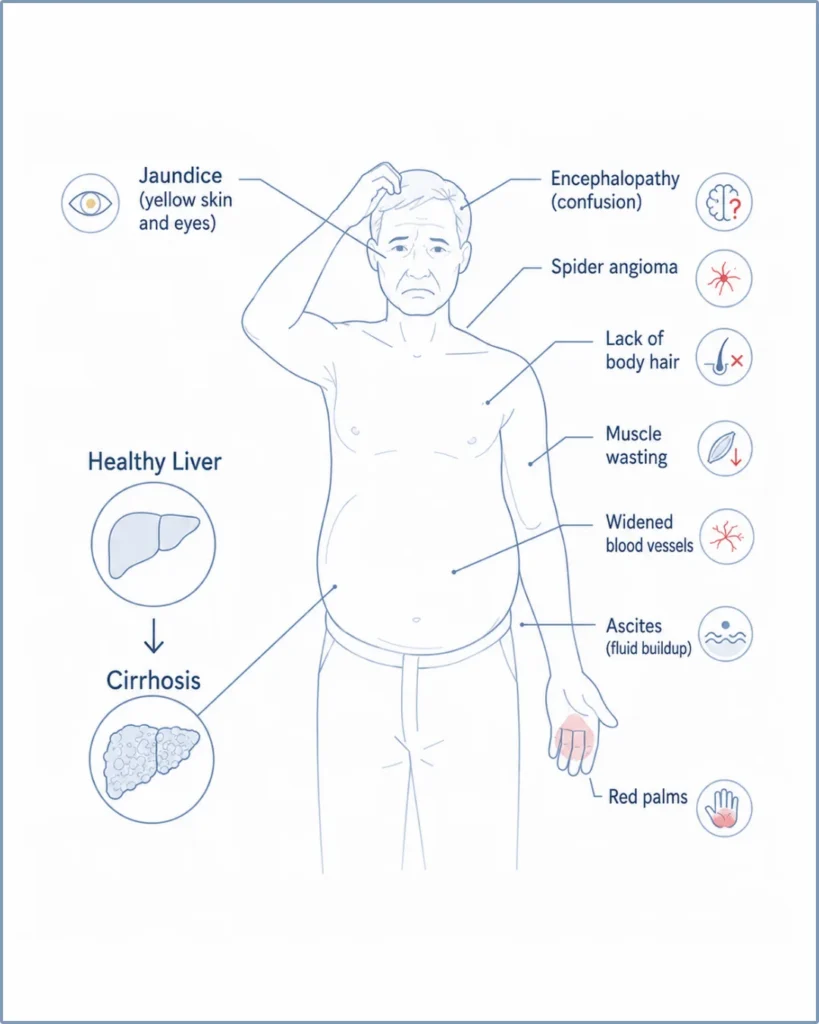
From my own patient experience and from 4,000 hours research, this is definitely what a decompensated cirrhosis patient l may look like. Talk to your liver specialist. I have personally reversed ascites and and have rebuilt my own muscles to be very strong now. That’s called reversing some Cirrhosis symptoms.

Cirrhosis symptoms include muscle wasting of arms and legs, red palms, caput medusae (veins around stomach), jaundice, edema (swelling of the legs).

Again, I can confirm from patient experience, this is what a decompensated cirrhosis patient often looks like, including ascites. Cirrhosis symptoms include muscle wasting of arms and legs, red  palms, Caput medusae (veins around stomach), jaundice and edema (swelling of legs).

I have personally reversed ascites and and have rebuilt my own muscles to be very strong now. That’s called reversing some cirrhosis symptoms.

Talk to your liver specialist. You may need to wait up to 12 months.

Your GP is not licenced to offer specialist liver advice. 

Internal signs of
portal hypertension

RECANALISED PARAUMBILICAN VEIN

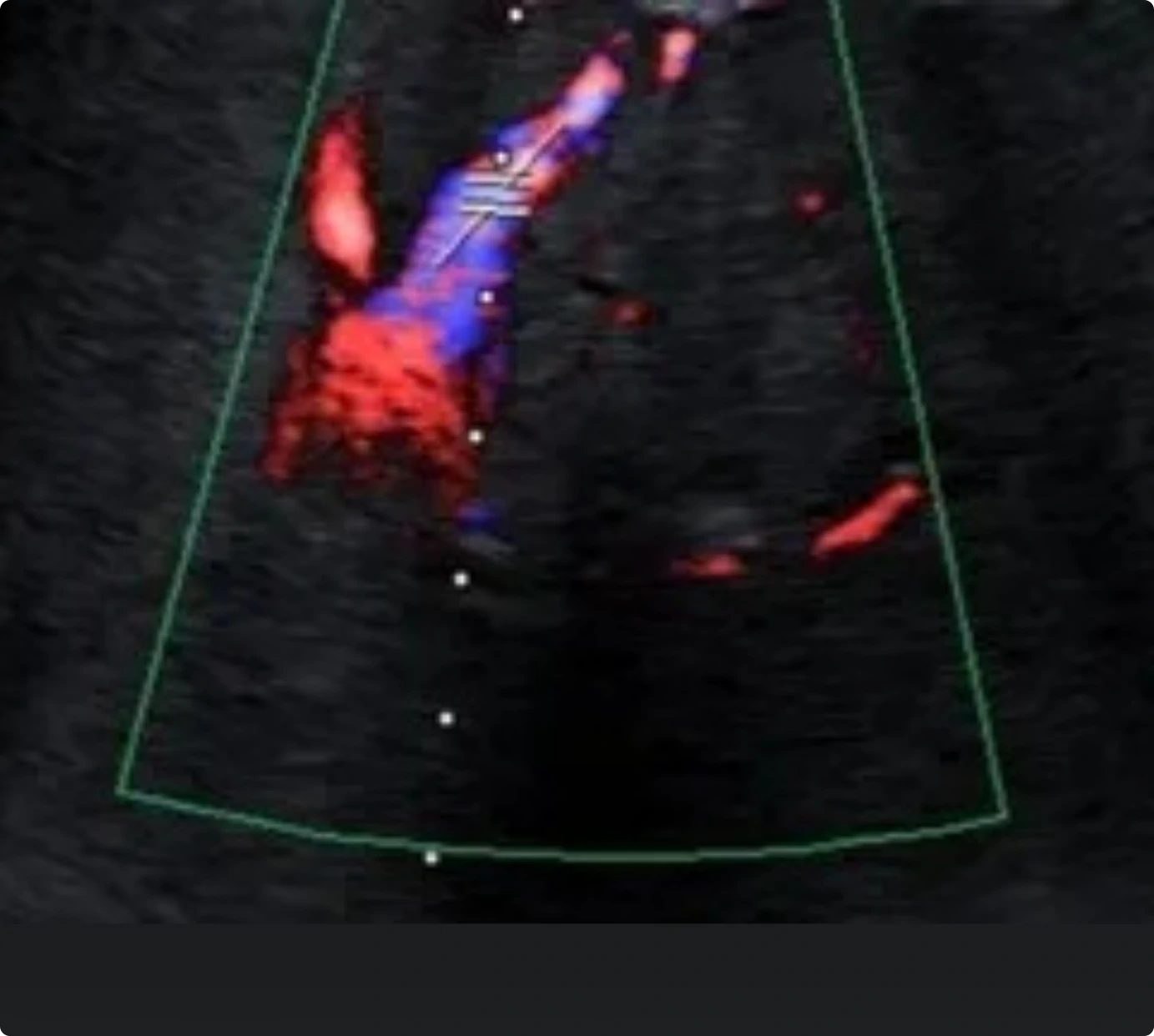
This is seen in up to 50%  of cirrhosis patients. An abnormal paraumbilical vein is over 3 mm and has flow outward of the liver.

The umbilical vein is a renmant  of your umbilical cord. This is closed at birth, and does not normally recanalize, only in portal hypertension. It is the body’s way of handling increased pressure in the portal vein.

Its all covered in the 620 page e-book and Spiral-bound book, with links to hundreds of medical studies and links.

All in the one place.

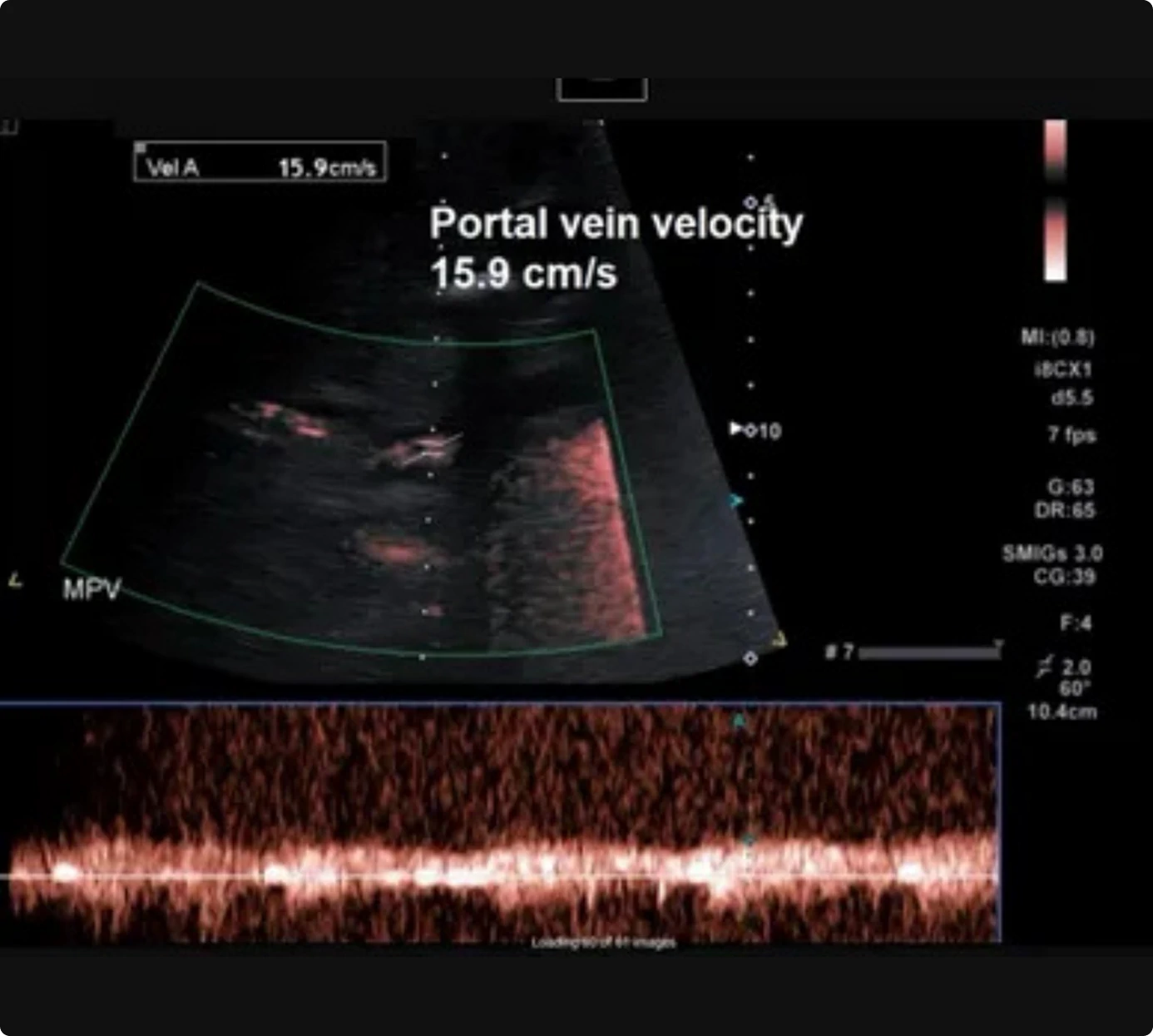
Portal vein velocity should normally be between 20–40 cm. So a velocity outside these ranges is considered abnormal. Portal vein velocity is often low, in Cirrhosis, due to increased fibrosis in the liver parenchyma. Your portal vein should be no more than 13 mm. Talk to your doctor and read the medical studies in the book. Normal liver cells are replaced by regenerative nodules. 

Talk to your GP. Unfortunately, this is not one of the topics that a GP may offer you advice on, being specialist advice. Assessment of the liver is an all-round process including blood tests  scan images, fibrosity and fat content tests including fibroscan. It also includes an ultrasound, CT, MRI, and MRE.

It’s all covered in the 650-page e-book, with links to hundreds of medical studies and links.

All in the one place.

Low portal vein velocity - Daviid, May 2023
On your first visit to the GP, they will take a medical history and vitals. They will then examine you for physical symptoms that you may show outwardly or internally, including pain.  

The GP will be able to see the more obvious symptoms as in the above sketches. They will check for vitals and maybe do a “dullness” test to see if your liver could be enlarged. They will use their stethoscope to check for any lung problems, which can be caused by the liver! The first blood tests are ordered by your GP on your first visit to your GP. The GP should order the five basic panels of blood tests. The GP should know quite a few of the other tests for suspected liver damage.  

In the book there is over 100 pages dedicated to cirrhosis and it is covered extensively. If the GP finds abnormal items on the blood test, then they should do fibrosis calculations like FIB 4 and ELF test. If these numbers are high, or your symptoms appear obvious, they should refer you to a liver specialist. You may need to wait up to 12 months to see a liver specialist, or any specialist.

The liver specialist will have their own blood tests required for the next review.

What are your chances to reverse
alcoholic Cirrhosis?

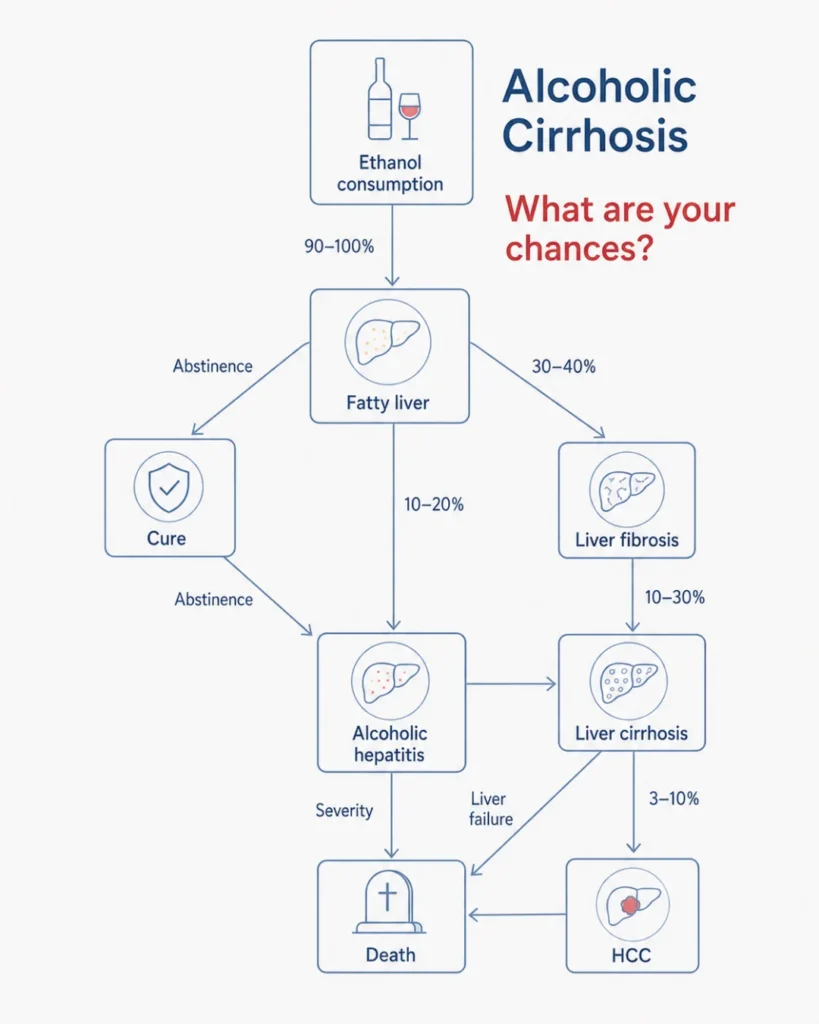
Can you reverse alcoholic cirrhosis ? I like seeing numbers. But how can you beat the numbers?

This is a great scientific medical article on alcoholic cirrhosis, typical of the medical studies provided in the medical studies library in the book.  The Effect of Inflammatory Cytokines in Alcoholic Liver Disease – Kawaratani – 2013 – Mediators of Inflammation – Wiley Online Library.

Note that this study in the book leads tinstanlty to another 117 medical studies, providing over 3,500 pages of information with one click of a button! That’s what happens when you read the book!


“I Iisten to everyone but I believe noone – be your own master” – David Manteit. 

There have been some remarkable liver restoration recoveries. They are in the book. Most recoveries of restoration of the liver don’t need to be remarkable, just making choices and determination. What are the chances of reversing alcoholic cirrhosis? Or alcoholic hepatitis ? Or alcoholic fatty liver?

Its much easier to reverse the earlier stages. Find out in the book.

Find out about more about
how to reverse Cirrhosis

Scroll to Top