
Fibroscan

How to lower Fibroscan scores

Reversing Fibroscan scores

Find out how 200 patients in one study lowered their Fibroscan score from 65kPa to 23 kPa on average.
Find out what they did.

The aim of the book is to enable the reader
to reverse their liver and liver associated disease conditions

Quote Component

“One must assess to address to achieve health success” – David Manteit

“One must assess to address to achieve health success” – David Manteit

This is the only book in the world that provides the reader a great deal of knowledge about assessment of the liver and associated conditions and how to reverse them. Why? Because we follow exactly the same steps as doctors use to assess, and the medical results you get. Fibroscan is becoming one of the leading methods to assess liver fibrosis and fat content.

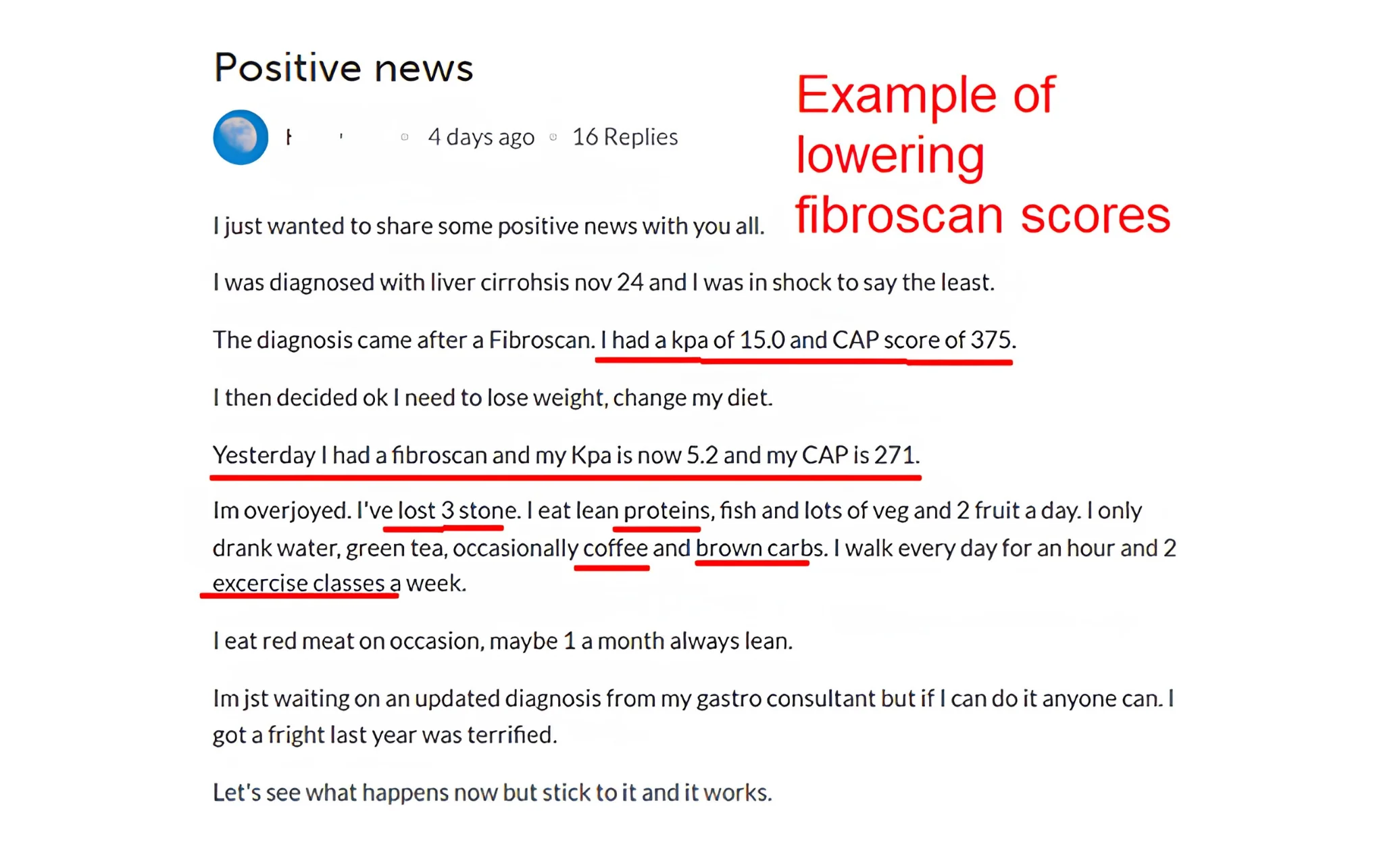
Fibroscan has reduced the need to obtain a biopsy. On that right – one of the hundreds of patient case studies and stories in the book of patients who have reversed their Fibroscan scores. Scores of examples are provided in the book of people reversing Fibroscan scores. Read for yourself.

Don’t drink, eat properly and keep your sodium reasonable, exercise as much as possible, drink as much (or as little) water as your doctor tells you. If you’re lucky it will go down. I’ve been stuck at an 8 for 6 months and I’ll test again in another 6 months, I started at an 18, 15 months ago.

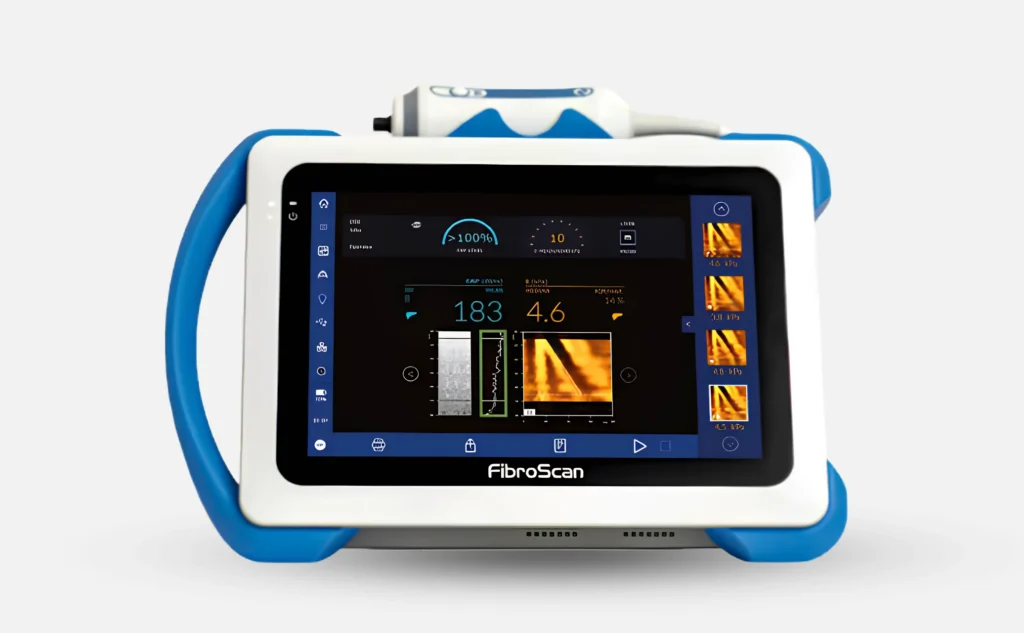
What is FibroScan®
and transient elastography?

FibroScan® is a non-invasive device that assesses the ‘hardness’ (or stiffness) of the liver via the technique of transient elastography. Liver hardness is evaluated by measuring the velocity of a vibration wave (also called a ‘shear wave’) generated on the skin. Shear wave velocity is determined by measuring
the time the vibration wave takes to travel to a particular depth inside the liver. A graphical representation of this is provided on the screen.

How the Fibroscan test
is performed

The procedure for a Fibroscan test is non-invasive and painless, similar to a standard ultrasound. The Fibroscan test usually takes about 10 minutes to complete and causes no patient discomfort. You will need to lie on your back whilst an ultrasound-like probe is placed on the skin over the liver area, typically in the right mid-axillary line. You will feel a gentle ‘tick’ each time a vibration wave is generated by the probe. Typically the test takes around 10 minutes to perform. In general, patients should have fasted for at least 2 hours before the procedure, although specific instructions may vary according to the operator. Because fibrous tissue is harder than normal liver, the degree of hepatic fibrosis (scarring) can be inferred from the liver hardness.

Reliability of Fibroscan Scores

Fibroscan scores results

The results will contain – Individual Fibrosis scores and an overall Fibrosis score, which reflects how much scarring is in your liver. CAP score, which tells you the overall percentage of fat in the liver.

How to analyse Fibroscan scores

A whole chapter in the Reverse your liver book is dedicated to Fibroscan scores.

Can Fibroscan scores be wrong?

Yes, up to 20% of Fibrosis scores can be wrong. All the reasons why this is the case are provided in the Reverse your liver book.

Other related chapters in the book
250+ Liver reversal solutions

FIBROSIS ASSESSMENT

2D SHEARWAVE

MAGNETIC RESOURCE ELASTOGRAPHY

ULTRASOUND, CT AND MRI ASSESSMENT

Plenty more info is provided in the book on the many medical and natural strategies of how to assess and reverse Fibrosis scores and fat content in the liver.
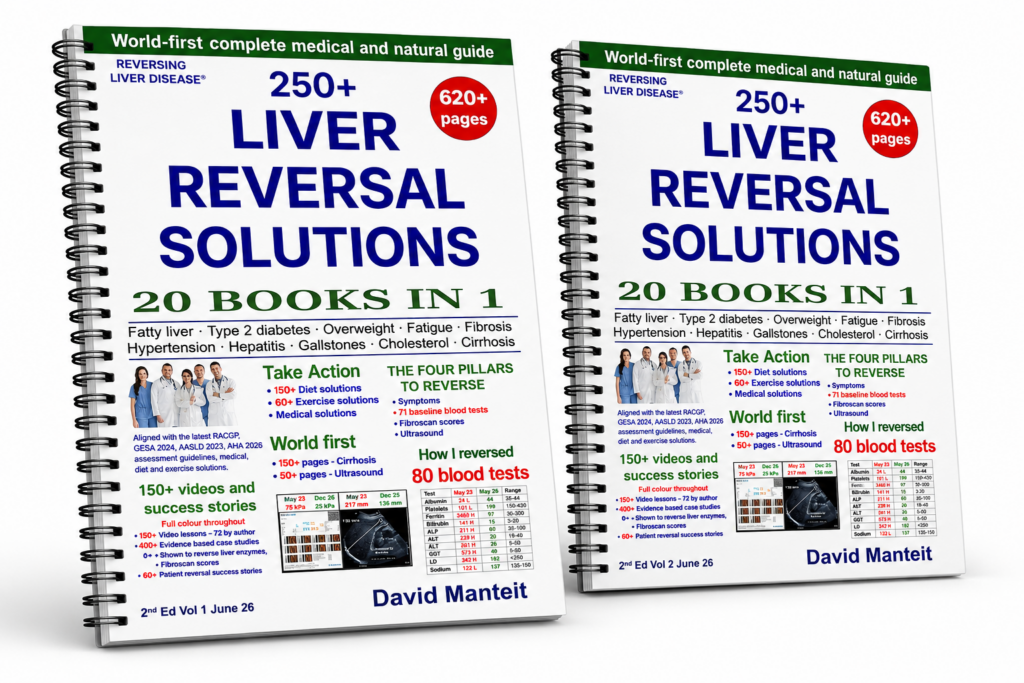

Restore Your Liver
The only book you will ever need to help you reverse your liver and asscociated conditions

Scroll to Top